Is There a Solution to War?
Why soldiers fight wars they don't believe in, and what it would take to stop them
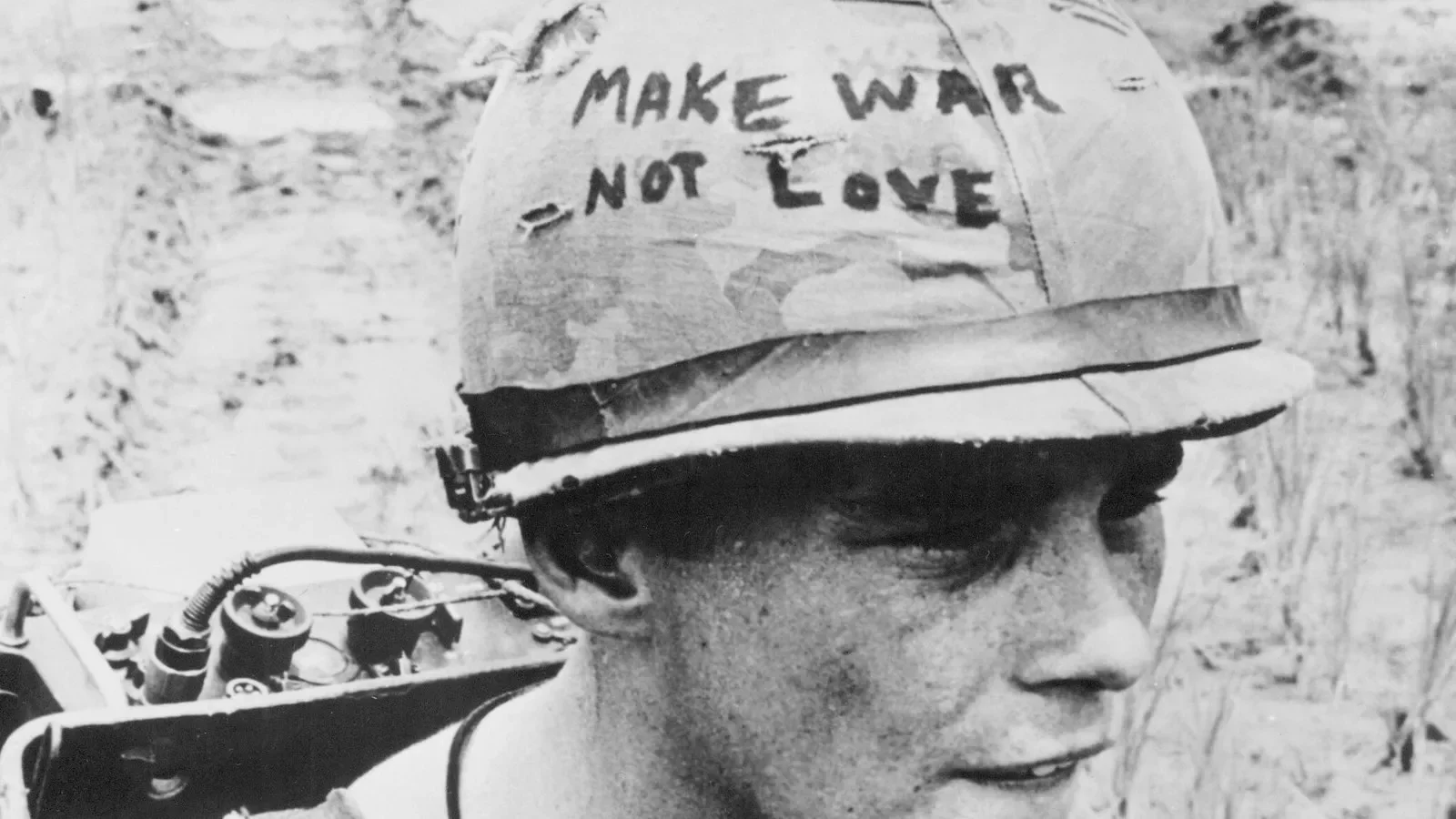
Editor's note: This essay began as an answer to a reader's question on Quora and was first published on Medium in December 2021. It has been lightly revised for this publication.
In a war, are the soldiers on both sides typically good people with good intentions, but their leaders have tricked them into thinking that the other side is evil? If so, how can we make military forces worldwide recognize when they are being tricked?
This is a very big question, one our species will likely always be asking, so it demands a long answer.
Good People with Good Intentions?
I think it's fairly well understood that most people, soldiers or not, lean toward doing good and living ethically if they're raised in reasonably normal circumstances. Most people want the same things: to love, to be loved, to look after the people they care about, to avoid suffering, to find purpose and meaning, and to be happy. The problem is that circumstances vary, and these desires mean different things to different people. To answer the question properly, we need to take a step back and understand something about human nature.
Our species has progressed and achieved far more than any other species that has lived and died on Earth. Yuval Noah Harari breaks this down in much more detail in Sapiens, but in short, the key ability that separates us from our ape relatives is our capacity to believe in collective myths of identity. By collective myths of identity, I mean things like countries, nations, nationalities, races, and the value of money.
If you think about it, a country doesn't really exist outside of our collective belief that it does. We draw imaginary borders on maps and globes, carry little booklets with our picture that list our nationality, and design flags with symbolic patterns to represent a group of people who live in a certain area under a certain set of rules (laws). We come to recognize that group as a country, or a nation. But it doesn't really exist. We believe these myths not only on a cultural level but on an individual one, all the way down to our names. Ask a random person "Who are you?" and they're likely to answer first with their name, then maybe their profession, then their age and gender, then their nationality, and so on. But again, none of these things exist outside of our shared belief in them. We form our identities out of imagined concepts.
Our species' ability to buy into cultural and individual myths is what allows us to organize and work toward collective goals, and this is what truly separates us from the rest of nature. Remember this for later.
Tricked by Their Leaders?
Have their leaders tricked them into believing the other side is evil? Again, this is a multilayered question that depends on circumstances, but in general the answer lies in why people go to war in the first place. There are two oversimplified answers:
You were conscripted, or pushed into military service by cultural pressure or economic hardship. In other words, you didn't have a choice.
You enlisted voluntarily, out of bravado, nationalism, a desire for glory, or a belief that the other side is evil.
There's no way to measure this with hard data, but my understanding of history and its major wars leads me to believe that the vast majority of soldiers fall into the first category (though a combination of both is probably very common). So the main problem is that most soldiers throughout history didn't have a choice in the matter. And even soldiers in the second category typically care more about bravado, adventure, or doing their part than about ridding the world of an evil enemy.
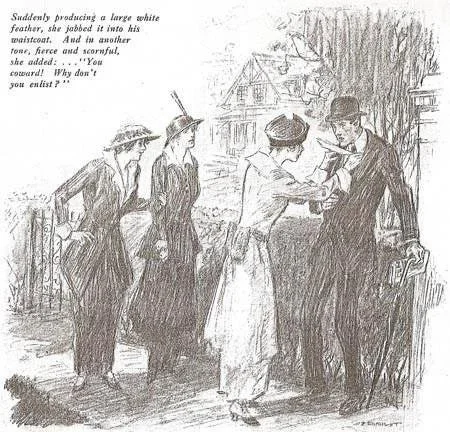
Take an example from history. The Great War is the classic example of a pointless war. In the UK, not only was conscription introduced with the Military Service Act in January 1916, but the country also relied on devious tactics like the White Feather campaign to publicly shame young men into enlisting. Founded in August 1914 by Admiral Charles Fitzgerald, the Order of the White Feather enlisted young women to hand white feathers, a symbol of cowardice, to men they found out of uniform: an act of public humiliation designed to drive them to the recruiting office.
I could go on with dozens of examples, but to conclude this section:
Most soldiers don't go to war because they believe the enemy is evil. They go because they're forced to, whether by conscription, social pressure, or nationalism.
Can Soldiers Recognize the Trick?
How can we make military forces worldwide recognize when they are being tricked? The problem is that, at least once a war begins, most soldiers already know.
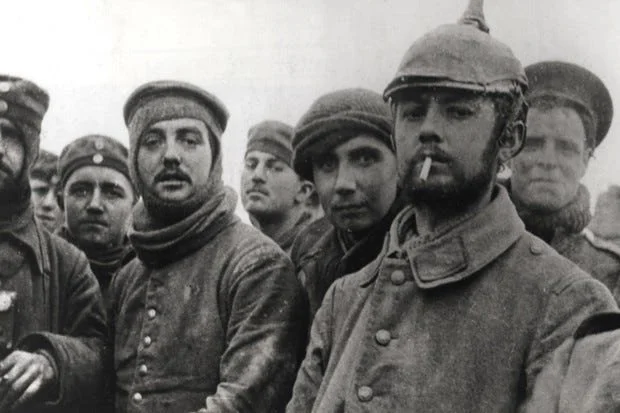
Christmas Truce, 1914
Take the Christmas Truce of 1914, when soldiers on both sides of the Western Front laid down their weapons, sang carols, exchanged gifts, shared cigarettes, held joint burials for their dead, and, by some accounts, played football in no man's land. These soldiers harbored no aggression toward each other. If anything, each could probably relate to the man across the line: someone far from home, missing his loved ones, unsure why he was fighting. The illusion of an evil enemy was completely shattered. Yet within days, they went back to killing each other.
Why? Because they had no choice. Desertion could be punished by death. So you could choose to die (dishonorably, I might add), or fight and maybe survive, or at least die with a sense of honor. Once someone is in a war zone, their chief motivation tends to be very simple: survive, which means killing the enemy before the enemy kills you.
So really, the only way to stop wars is to keep soldiers from going to war in the first place. As we've seen, conscription makes this very difficult, but it would be a lazy answer if I ended it there.
Refusing the Draft
So what would it take for soldiers to refuse to fight, even under a draft?
The answer comes back to the myths that give us identity, because with identity we also become separated from one another into categories. My country, your country. My religion, your religion. My culture, your culture. Us, them. When we spend our whole lives wrapped up in these myths, it becomes extremely difficult to recognize them as myths. A fish doesn't know it's in water if it spends its entire life submerged.
For me, the true answer lies in dissolving the myths of nationalism and patriotism, and with them the myth of us versus them, perpetuated by the press, the state, and the culture, which ultimately drives societies to war. Since we're biologically hardwired to believe these myths, breaking them down is a tall order, but the first step is recognition. Once the myths behind a war reveal themselves, that war usually can't be sustained.
Wars that lose their mythic stature for the public, such as Korea or Vietnam, are doomed to failure, for war is exposed for what it is—organized murder.
— Chris Hedges, War Is a Force That Gives Us Meaning
Take a step back and recognize that you are largely the product of a culture that is out of control. No one is really steering the ship; thousands of different forces are simply clashing together to drive what we call "progress." The categories we use to classify and label large groups of people aren't real, so most of the justifications given for going to war aren't real either.
Patriotism is, fundamentally, a conviction that a particular country is the best in the world because you were born in it.
— George Bernard Shaw, The World, 1893
That should be fairly self-evident, but it can be incredibly hard to see if you were raised pledging allegiance to a flag every morning in elementary school.
If enough people understood that nationalism is mostly an aftershock of our innate tribal instincts, maybe we would finally see war for what it is: two branches of the same tree trying to kill each other.
But first you need to recognize the tree, and to do that you need to deconstruct nearly everything you've ever been taught to believe about life. Ask yourself who you really are, and see what you find. Are you an American? A German? A Spaniard? A European? Go deeper. You're homo sapiens. You're an ordinary self-aware being who just wants to live well, love and be loved, and be happy.
We're all branches of the same tree.
The goals we seek when we embrace the myths of war are never achieved.
But these are the same myths that hold our species together. So, unfortunately, it’s almost certain that war will be here until the end of our species. It may very well be the end of our species.
