Now That I’ve Turned 30
Bo Burnham’s Inside, closed doors, and the strange clarity of growing up.
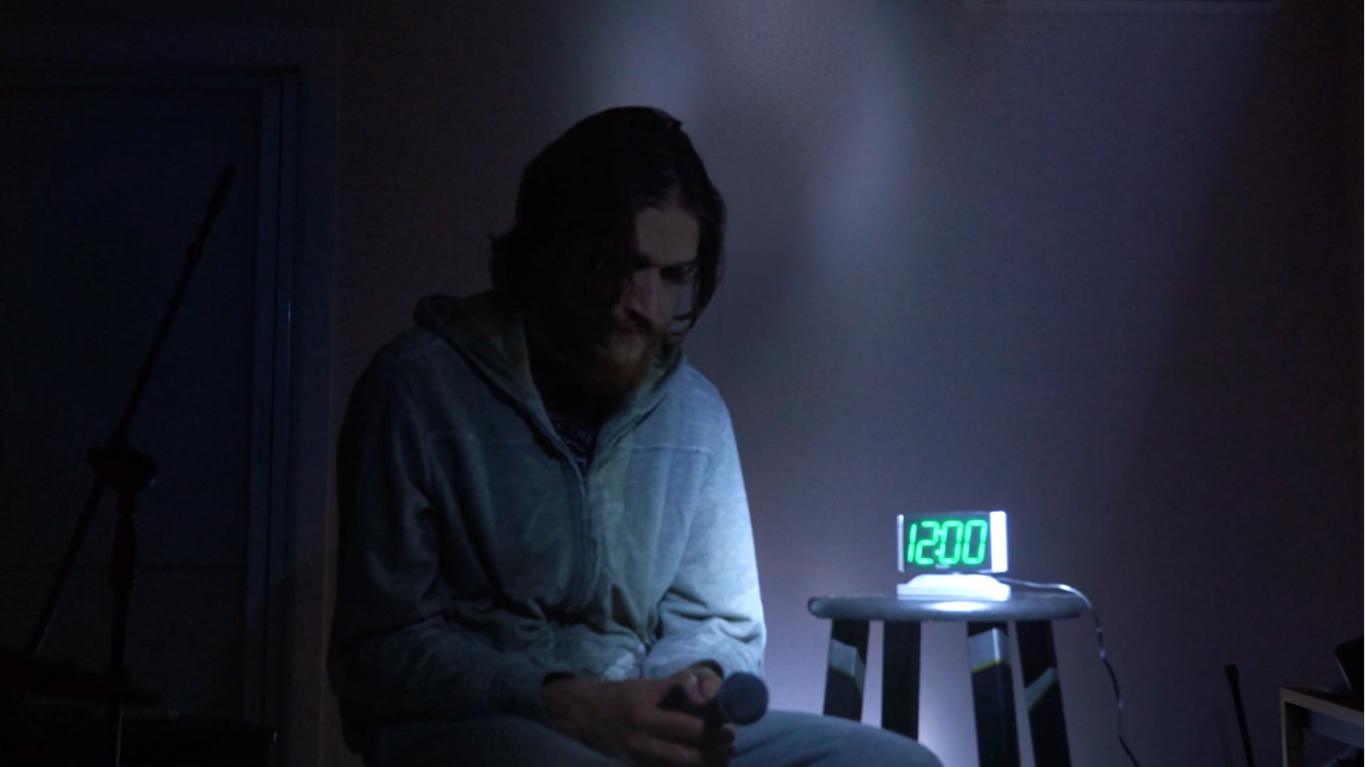
The first minute of Bo Burnham’s thirties, from Inside.
I turned thirty this year, the number that many fellow aging people in their twenties see coming with dread.
Twelve years after True Detective first aired, I have reached the age where the time is a flat circle line is starting to feel like an explanation for why I keep returning to the same music, the same movies, the same video games…the same versions of myself I thought I had outgrown.
As a twenty-four year old watching Bo Burnham turn thirty live in Inside, I couldn’t help but feel a twinge of pity for the man and think that my life would be over six years from now. But now that I’m here I’ve come to conclude that thirty is the most interesting of all birthdays because it offers unmatched clarity.
But first, let’s examine the approaching-thirty-dread.
By the time you are twenty-nine, thirty has acquired the status of a verdict. It is the age where outside observers begin looking to see if your life has taken a recognizable adult shape. And so for many it can become a time of internal reckoning; a chance to recognize you’re not where you hoped you'd be at this age alongside a wake up call to get after it. Or it can be the quiet comprehending that you never will be what you once saw yourself as becoming. Or it can simply be the distaste that you’re getting older and seeing those signposts of mortality (Bo’s song hints at what he’ll do in 2030.)
These forms of anxiety are there in Inside, too. 30 is funny because its panic is exaggerated but completely recognizable. We’ve all caught ourselves comparing ourselves to older generations, or grumbling about the younger ones. And these moments tend to offer anxious reflection. Why do I sound like a boomer? Am I becoming the less successful version of my dad? We know life doesn’t end at 30, but we are scared about what happens next. In That Funny Feeling he extends that personal anxiety outward, imagining the future as a kind of cultural and existential deadline (I tried to capture this in my edit of That Funny Feeling as a music video).
In practice, turning thirty is the modern world’s litmus test of your progress in life. It’s society’s checkpoint to determine if you’ve become a success or failure. Does this person have kids? A spouse? A job? A house? Are they still living at home? Have you become someone whose life makes sense on paper?
Doors begin to close at this age. People settle into lanes, whether by conscious choice or simply process of elimination. And this is what hurts us. If you have chosen a path, there is not only the inevitable second-guessing of that choice, but also the realization that you can begin to see what the next thirty years of that path might look like—and, perhaps more painfully, what they will definitively not look like (I, for one, may never entirely get over the fact that I am now too old to join the Marine Corps…). And this is what hurts.
The imagined versions we have of ourselves don’t necessarily fade because we reject them, they disappear because in the end time makes the decision for us.
Thirty is also the age where paths tend to diverge in ways that alter friendships. If your stupid friends are having stupid children, then you probably don’t see them at every poker night anymore. And if you’re not having stupid children, you might be torn up about that too.
So there are a lot of anxieties about turning thirty. Some of this is structural. I get it, housing is expensive, careers are less linear, families are being started late. It’s also existential, because while age might be “just a number,” it is a number that quietly suggests how many numbers you have left. But at the number 30 a few unique things happen to a person that are too good to go unrecognized.
For one, there is a best of worlds in not being “young” anymore, and not being “old” yet. You still have enough youth to act impulsively, embarrassingly, and with real physical energy. But you have enough experience to understand that not every urge deserves to become a plan, and most closed doors were never yours to walk through in the first place.
Also, telling someone older than you that you are thirty seems to instantly command a new kind of social credibility. It is as if you have finally accumulated enough lived experience to qualify for seriousness, maturity, and poise. I do not look dramatically different from when I was twenty-nine, but saying that my age begins with a three feels a little like stepping off an elevator onto a floor I was never previously allowed to enter.
Yes, I am losing some of the athleticism I took for granted in my early twenties. I now wake up with occasional injuries that have no origin story, and I have begun to stretch before soccer with the grave seriousness of a man preparing for a military operation. And my hairline does seem to be tactically retreating. But I have gained something more useful than unlimited physical confidence: a clearer sense of what actually restores me, what drains me, who I want to spend time with, and which ambitions are mine rather than merely available to me.
At twenty-two, possibility was intoxicating because it was unlimited. I could imagine becoming nearly anything, largely because I had not yet tried to become very much. At thirty, possibility is narrower, but it is more real. I know enough now to distinguish a fantasized version of myself from a desire I am actually willing to build a life around.
Maybe that is what thirty is. Not the age when time starts taking things from you, but the age when you first notice it has been taking things all along. Some futures disappear. Some friendships change shape. Your body becomes less willing to let you pretend that you are indestructible.
But the same process gives your choices weight. While you are no longer standing in front of every possible door, you are finally beginning to recognize which ones you actually want to open.
At twenty-four I watched Bo Burnham turn thirty and thought I was watching a man arrive at the end of something. At thirty, I think I discovered that a beginning and an end can look exactly the same from inside.
