Looking to History as Disaster Looms
Will COVID-19 be the defining tragedy of our time?
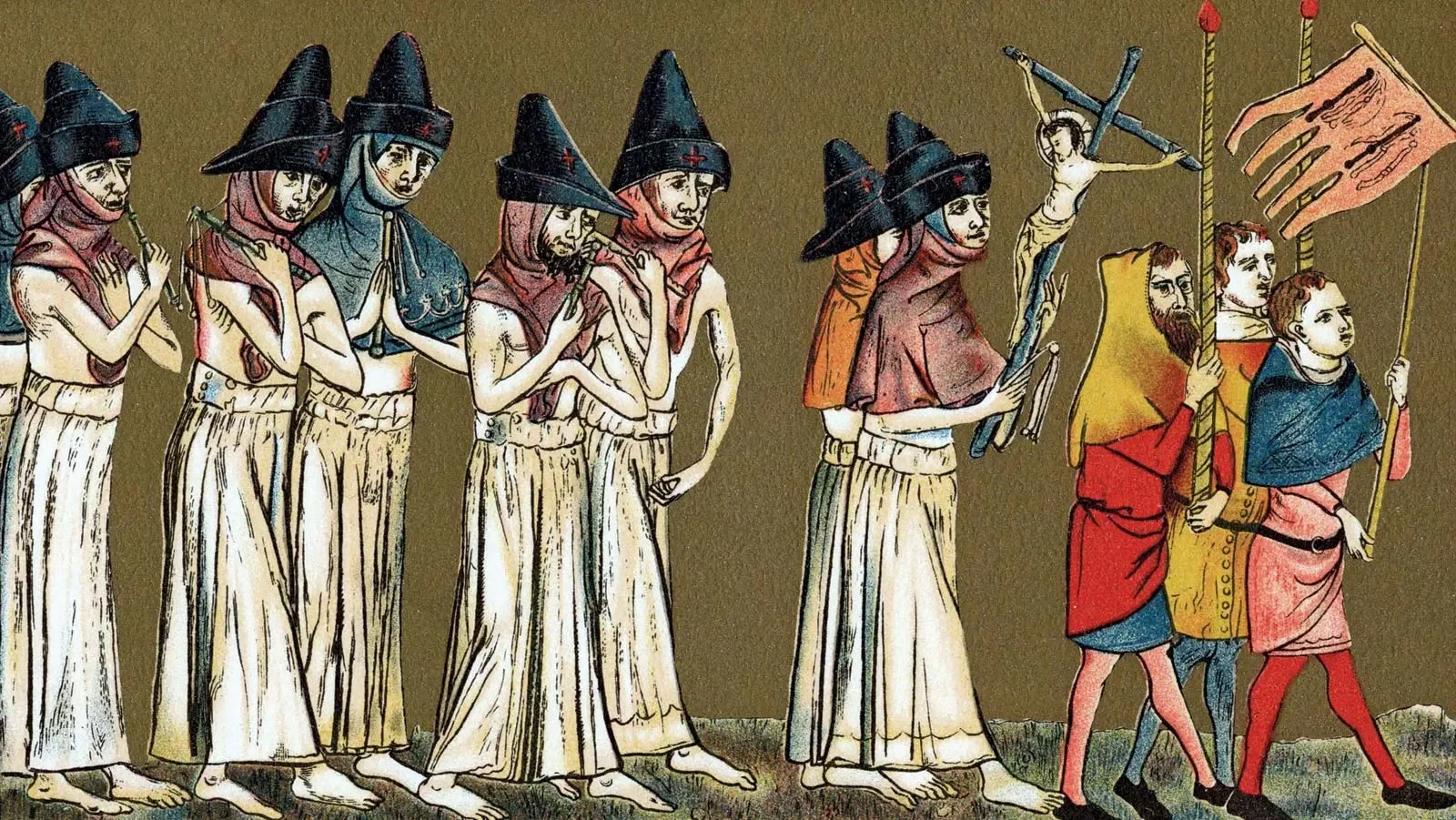
The Flagellants Attempt to Repel the Black Death
The Great War. The Depression. World War II. The Cold War. Will COVID-19 join their ranks?
This the question that occupies my mind on a sixth consecutive day spent in isolation. The sixth of ten? Twenty? One hundred? My company, like most, has implemented a work from home policy effective until March 31st, but returning to the office on April 1st seems unlikely. Exponential growth in COVID-19 cases is expected, with data suggesting a 58% infection rate in 4–8 weeks. The disease itself is not terribly deadly, but the strain on healthcare systems and economies around the world could be. US Secretary of Treasury Steve Mnunchin has warned of depression levels of unemployment. In a time of uncertainty, one thing is certain: this event is unlike any other experienced in many of our life times. One cannot help but wonder if the world is teetering on the brink of yet another historic disaster.
The relative luxury, stability, and comfort of the 21st Century insulates us from the nasty and brutish history of our ancestry. In an age of peace and prosperity, it’s easy to forget that members of our species have endured every form of suffering both imaginable and unimaginable. Human history is a charnel house of unthinkable horrors. Yet, we study tragedies of scale and read personal accounts of mass devastation with little more than brief unease. Take an account from one of the very worst:
The plight of the lower and most of the middle classes was even more pitiful to behold. Most of them remained in their houses, either through poverty or in hopes of safety, and fell sick by thousands. Since they received no care and attention, almost all of them died. Many ended their lives in the streets both at night and during the day; and many others who died in their houses were only known to be dead because the neighbours smelled their decaying bodies. Dead bodies filled every corner.
We can read Boccaccio’s account of the Black Death with awe and disgust, but we are simply unable to grasp the reality of living through such a cataclysm. In fact, even those who lived through it were skeptical of their calamity being believed. O happy posterity, wrote Renaissance poet Petrarch after watching half of Florence die, who will not experience such abysmal woe and will look upon our testimony as a fable.
By itself the Black Death stands out as peak horror, but upon taking its place in the filing cabinet of history it becomes a needle in a stack of needles. It raises the question: Unless personally affected, how much sorrow do we truly feel for the victims of genocide, famine, and pandemics gone by? The reality is next to none. Though we may tearfully read Anne Frank’s diary, the unlikely prospect of having to endure the same experience serves as a buffer. We in the First World instinctively view ourselves as immune to the horrors of yesteryear. Surely, one thinks, we’re beyond all of that.
I’d like to be clear. I’m not stockpiling for the apocalypse. I’m not worried about a plague level pandemic. I still think that society is going to be fine.
But therein lies the paradox. How many times was the same feeling of security felt among history’s doomed? Those born at the turn of the 20th century were raised to love and inquire about the world, but a few years later this love would be buried on muddy fields throughout Europe. The very same world that taught a generation of love and beauty would, in an instant, turn to teach death and misery. History confirms that the most troubling of times are often the least expected. Two weeks before the start of The Great War, peace was certain. Who could have known that the developing conflict would come to be known as World War One?
How wrong they were. How wrong are we?
How might the talents of our generation be wasted? Will our times be documented in a dry, dreadful chapter in a history book filled with similar, indistinguishable horrors? One of the greatest perpetrators of such horror once proclaimed that a single death is a tragedy; a million deaths is a statistic. Will the statistics of our time be scribbled on flash cards by our great-grandchildren? It’s far from unlikely. The world makes a habit of changing in the bat of an eye.
Whatever times may lie on the horizon, the outbreak of COVID-19 presents a humbling reminder: neither mother nor human nature has yet been tamed and we are at their mercy. As the sun, moon, and stars tick on in the cosmic cycles of an indifferent universe, so too the agents of prosperity and calamity continue a delicate game of cat and mouse here on Earth.
